

 Dr. Norman Oliver, state health
commissioner, on COVID-19 myths,
important public health resources,
and how families can move forward
Some of the recent coronavirus searches on Google asked how long an infected person is contagious, if nausea and sore throat are COVID symptoms, if dogs can get COVID-19, and when will coronavirus go away.
Fortunately, when the searches are conducted, the top hits include links to the Centers for Disease Control and Prevention, the federal public health agency leading the U.S. defense against the virus. People can expect reliable answers from the CDC, the Virginia Department of Health, the World Health Organization, and other trusted public health sources. You can always turn to these official sources for the most credible information, particularly when it comes to dispelling myths and misinformation like those examined here.
Myth: Homemade masks are not effective.
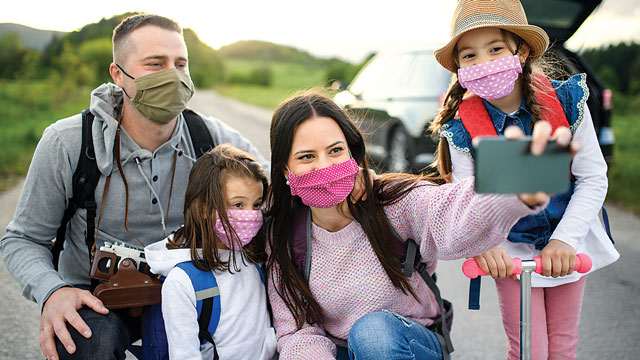
A number of studies show that wearing cloth masks made of cotton can reduce transmission of COVID-19 spread by respiratory droplets. It’s important for everyone to wear cloth face coverings in public settings and to practice social distancing (staying at least six feet away from other people). Wearing a face covering may feel weird or uncomfortable because we are not used to it, and it can be a challenge if it’s hot and humid or your glasses fog up. If you are having a hard time breathing, your cloth face covering might be too thick. Despite these issues with comfort, it’s important to wear a mask in public.
Myth: Wearing a mask can make you sick.
There is no scientific proof or evidence that wearing a disposable mask or cloth face covering can hurt your immune system. Nor is there any scientific proof or evidence that wearing a disposable mask or cloth face covering can hurt your oxygen levels or make you breathe in dangerous levels of carbon dioxide. Face coverings help limit the amount of respiratory droplets that go into the air when we speak, cough, or sneeze. Doctors, nurses, and other medical staff have been wearing face masks for decades. Disposable masks should be thrown away if they become wet or dirty and should only be used one time. Cloth face coverings should be washed after each use.
Myth: If soap and water kills this virus, it’s obviously not deadly.
As of press time for this magazine, more than 174,000 people in the United States had died from COVID-19, so the virus can kill. Handwashing has been proven to interrupt transmission of many diseases, including influenza, the common cold, and viral gastroenteritis. With the novel coronavirus (which causes COVID-19), soap acts at a molecular level to dissolve the outer layer of the coronavirus. Water creates a soapy lather that enhances the effect of handwashing and rinses away the germs. Using hand sanitizer that is at least 60 percent alcohol is an option when soap and water are not available.
Myth: If I wear a mask, physical distancing is not necessary.
You should do both. When you go out, stay at least six feet from other people as often as possible. Distance can be difficult to maintain at all times in enclosed spaces, so wear a mask, too. More and more places are requiring people to wear masks to enter, while also limiting the number of people who enter, marking aisles as one way, sanitizing store carts, etc. Wearing a mask, social distancing, and andwashing should happen in combination, not in place of one or the other.
Myth: I can get tested as often as I want, so I know I’m in good shape.
Testing is available, but capacity varies. Because of the resurgence in cases, more people are getting tested, so it’s taking laboratories longer to return test results. People can have COVID-19 for several days without having symptoms, so even if you don’t feel sick, you should quarantine while waiting for your test results. A test which comes back negative was performed at a unique point in time and does not protect you from getting infected in the future.
Myth: Only Black people have serious complications from COVID-19.
Data suggest Hispanic/Latinx, and Black people are at greater risk of dying from COVID-19 than non-Hispanic Whites, but that is partly because of issues such as the health effects of racism and lack of access to care. Blacks and Hispanics comprise a disproportionate number of those working in public-facing jobs such as in retail stores and public service, which means increased opportunity for exposure to COVID-19.
Myth: Young children don’t get seriously ill, so kids should go back to school.
Children are not going to school in a vacuum, and while the vast majority may not get seriously ill, they can spread the virus to their teachers and other adults who may be at risk of serious illness. The closed classroom environment can make social distancing difficult. Also, it’s not just the distance, but the amount of time we spend around other people that can contribute to transmission risk. A quick trip to the market for a few grocery items may be less risky than spending multiple hours in a group setting, even when social distancing.
The CDC is also tracking cases of a rare multi-system inflammatory syndrome in children (MIS-C). As of July 15, CDC has received reports of 342 cases and six deaths in thirty-seven jurisdictions. Most cases of MIS-C have been in children ages one to fourteen, with an average age of eight years.
Myth: COVID-19 is just like getting the flu.
Some people can be infected with COVID-19 and not have any symptoms. Some will have symptoms that they can manage at home under isolation, while others will need to be hospitalized, sometimes in critical care units. COVID-19 doesn’t just affect the respiratory system, but can affect the heart and other systems in the body. Some people who have recovered from COVID-19 have permanent damage.
But as we enter the traditional flu season, don’t downplay the flu. People die from the flu, too.
Myth: If you get COVID-19 once, you can’t get it again.
This is still being studied. Researchers have written about COVID-19 patients who were considered recovered after testing negative for the virus twice, but who later retested positive. Were they re-infected or were the previous negative tests inaccurate? Public health officials and scientists will be following this closely in the coming months, as it will help us make decisions about public health efforts and ways to stay safe.
Myth: If you have COVID-19, you will know it.
Some people infected with the virus don’t have any symptoms or don’t have any symptoms in the first few days. These asymptomatic and pre-symptomatic carriers may still be able to infect others, but it is not known how likely that is to occur. For some people, losing sense of smell and taste are the only symptoms.
Myth: If I am young, exercise, eat a healthy diet, and get COVID-19, I will get over it.
Maybe, but that is not guaranteed. People of all ages have died from COVID-19.
Myth: Being able to hold your breath for ten seconds or more without coughing or feeling discomfort means you are free
from COVID-19.
A laboratory test is the best way to confirm if you have the virus. Dry cough, feeling tired, and fever are the most common COVID-19 symptoms, but not everyone has these symptoms. Some people have fever and body aches, but no shortness of breath or cough.
Myth: You have to be around someone with the virus for at least fifteen minutes to be infected.
Brief interactions are less likely to result in virus transmission, but if a person with the virus coughs or sneezes directly into your face, the risk goes up. To slow the spread of COVID-19, public health workers try to locate anyone who has been in close contact with someone who has tested positive. These workers, called contact tracers, look for people who have spent at least fifteen minutes within six feet of an infected person. These close contacts are asked to self-quarantine.
As we find a way to live with this pandemic and do our best to protect everyone in our community, remember that you are safer at home. Please do your best to follow guidelines that will help limit the spread: maintain physical distance of six feet from others, wash your hands frequently, and wear a mask in public.
For more information on COVID-19, visit the CDC and Virginia Department of Health websites.